Category: Project Overview
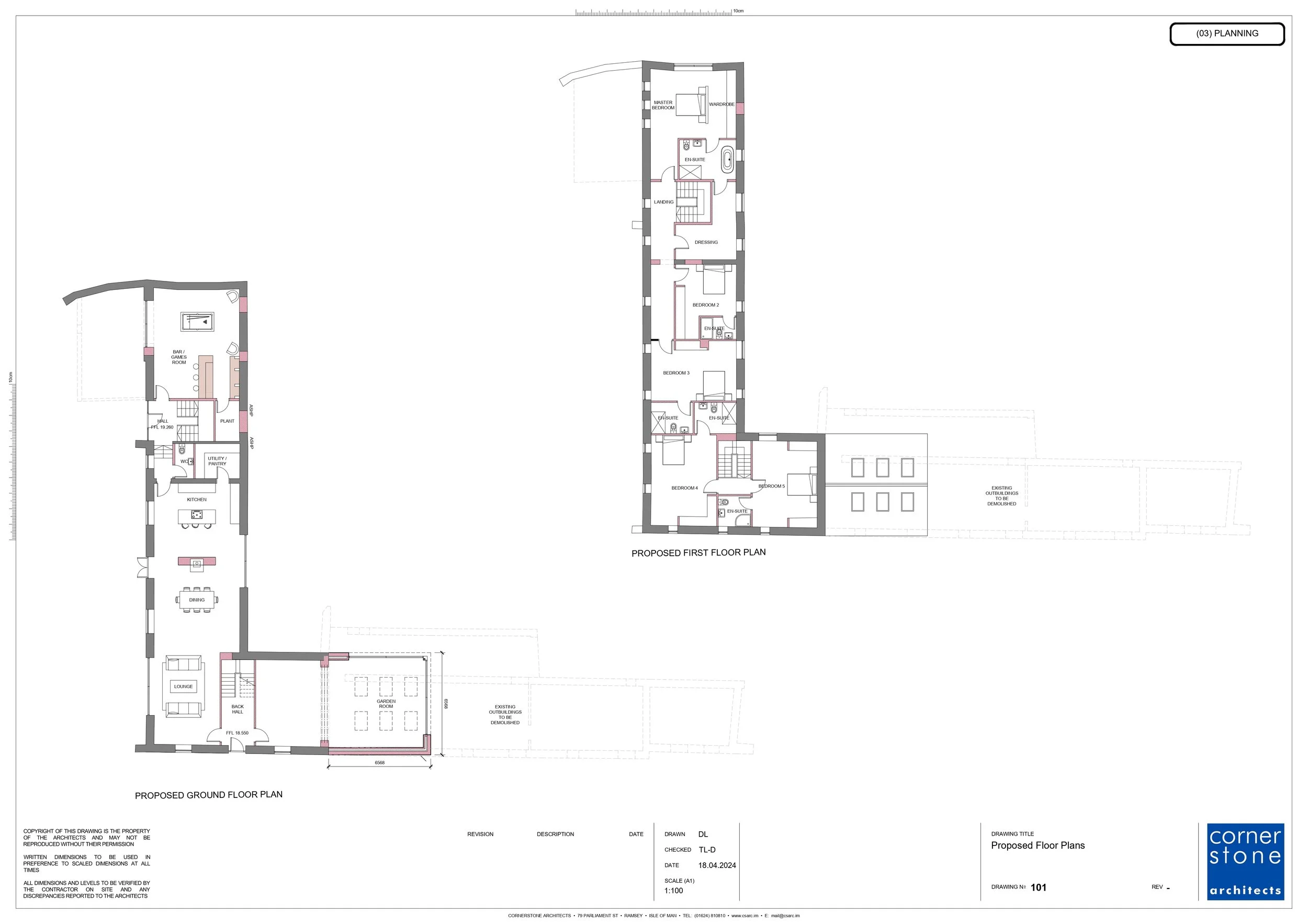
This project represents an example of how a redundant agricultural building can be repurposed in a way that respects both its historic fabric and its surrounding landscape. The proposal focuses on converting the existing two-storey stone barn (which is largely intact and dating back to around 1780) into a contemporary rural home with a modest extension and associated landscaping.
Before design work began, we carried out a full site appraisal to understand the barn’s condition, form and setting, along with access, vegetation and wider environmental factors. These findings, combined with early discussions with the client, established the parameters for how the building could be adapted and where new interventions would sit.
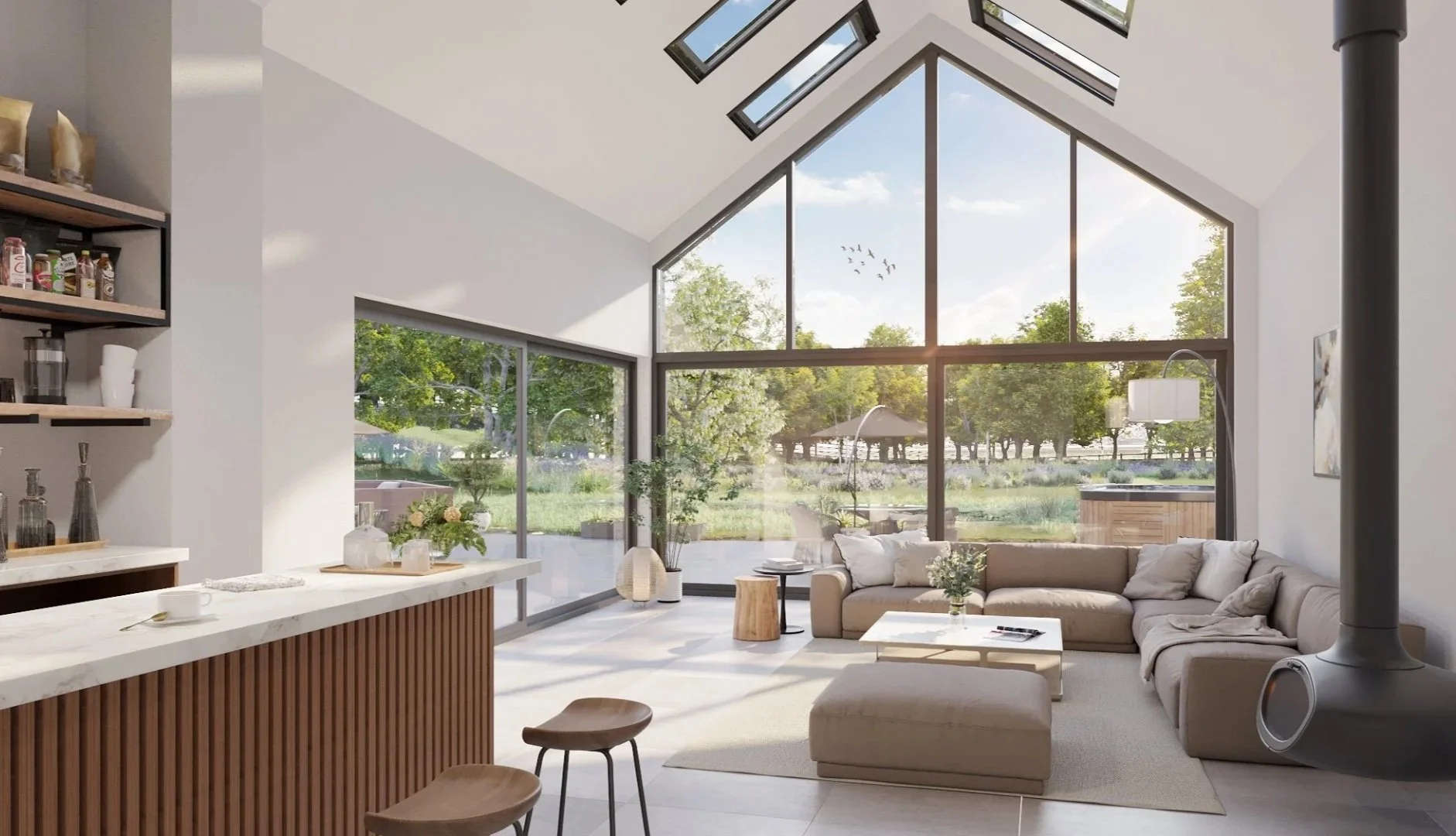
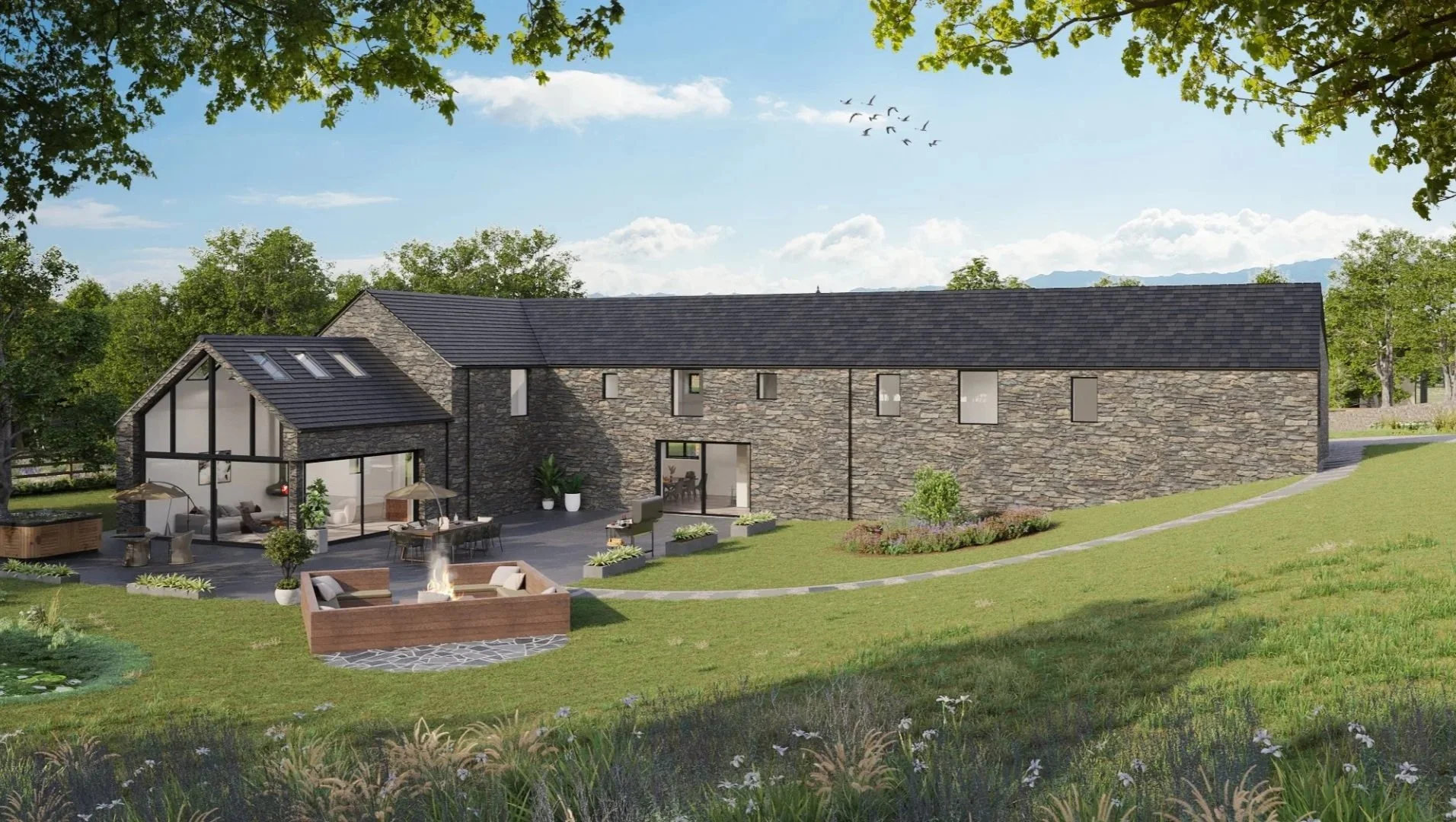
The design focuses on retaining the strongest elements of the existing stone structure and introducing a modest south-west extension to make the most of views across the garden and proposed pond. The main living spaces sit within the original barn volume, with a stepped floor improving headroom while maintaining circulation.
Material choices (lime-mortar repairs, reused stone, and a new natural slate roof) were driven by practicality and context. Externally, the landscape incorporates a new patio, sunken seating, wildflower planting and wider biodiversity enhancement.
Throughout the design process, we worked closely with local structural, arboricultural and ecological consultants, incorporating their findings and maintaining ongoing dialogue to ensure the proposals responded to both site conditions and the client’s aims.
A full structural appraisal confirmed that the eastern section of the barn (the area proposed for redevelopment) is in generally sound condition. The stone walls are largely plumb and capable of retention, with only localised repairs required. Other components, including the roof, first floor and ground floor, are unsuitable for reuse and will therefore be fully reconstructed. This is typical for buildings of this age and aligns with a retrofit-first strategy: retain what works, and replace only what is necessary to ensure safety, durability and performance.
Recommended works include repointing, the removal of invasive vegetation, drainage improvements and reconstruction of internal structural elements. These interventions protect the historic fabric while allowing the building to meet modern standards without overextending the level of intervention.
Environmental assessments informed both the landscape strategy and the construction methodology. Tree surveys identified necessary removals (primarily self-seeded or low-value trees that have become established during the site’s long period of disuse) and set out protection measures for retained trees, including construction exclusion zones and appropriate fencing.
Ecology reports confirmed a low potential for bat maternity roosts but noted possible use by hibernating or transient bats. In response, the design incorporated bat boxes, sensitive external lighting and suggested construction timings that avoid key seasonal periods for both bats and nesting birds. Bird nesting provision has also been included to reflect species previously recorded on site.
The landscape strategy reinforces ecological value through features such as reptile refugia, wildflower seeding and enhanced pond habitat. Additional native replanting has been advised to compensate for the removal of trees and to support long-term biodiversity across the wider site.
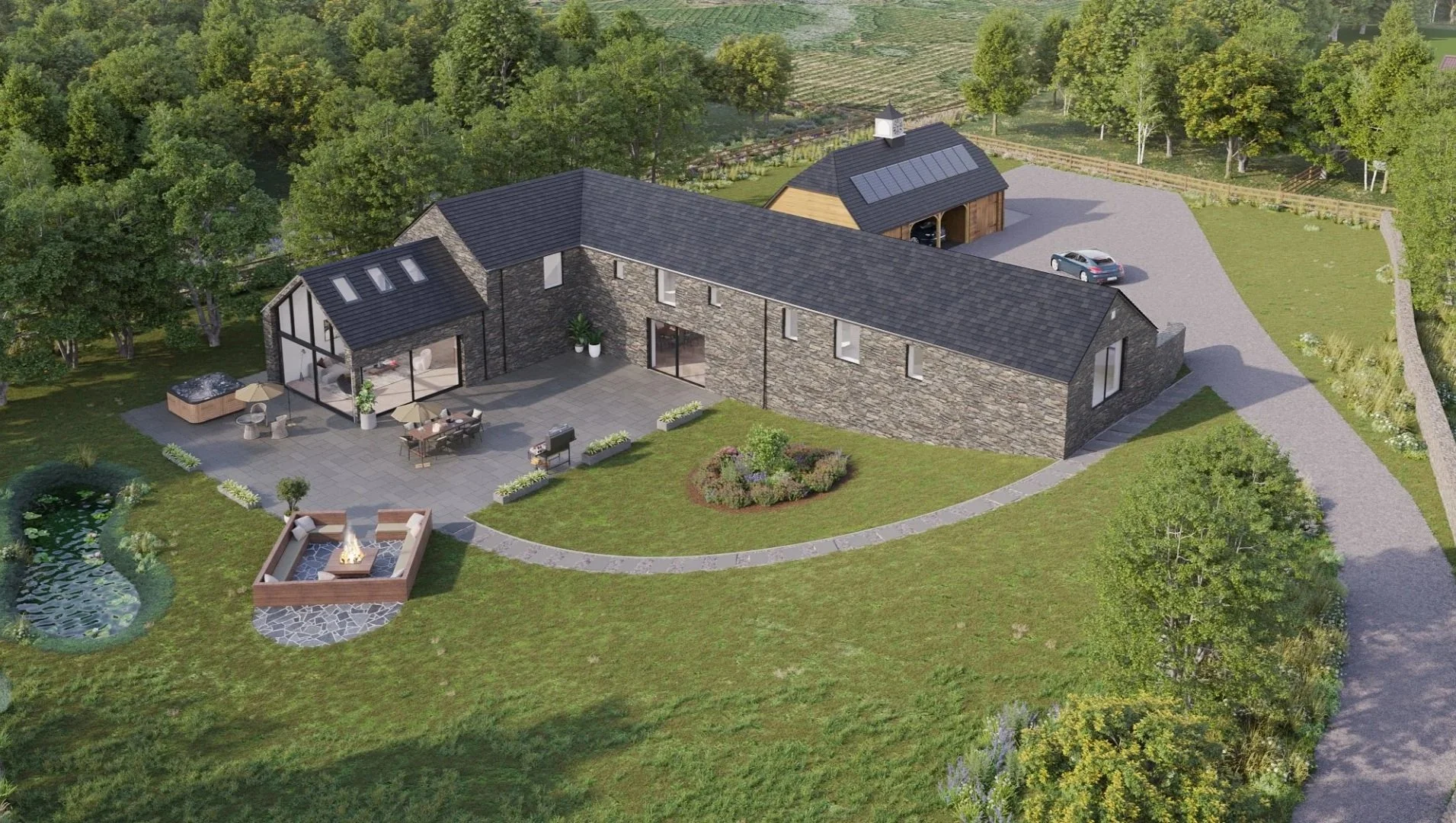
This project demonstrates how a rural building can be converted efficiently and responsibly. The approach retains the stone structure where viable, reconstructs components that cannot meet modern standards, and integrates an environmental strategy that strengthens rather than competes with the surrounding landscape.
The result is a straightforward, well-considered response to a historic rural site.