Revitalising a Brownfield Site: Planning Appeal Success
Category: Project Progress
We are please to confirm the successful outcome of a recent planning appeal for Ocean Castle, a major new residential development on a prominent seafront site in Port Erin. The scheme will transform a long-vacant gap on the promenade into a high-quality contemporary building that contributes positively to the character of the bay.
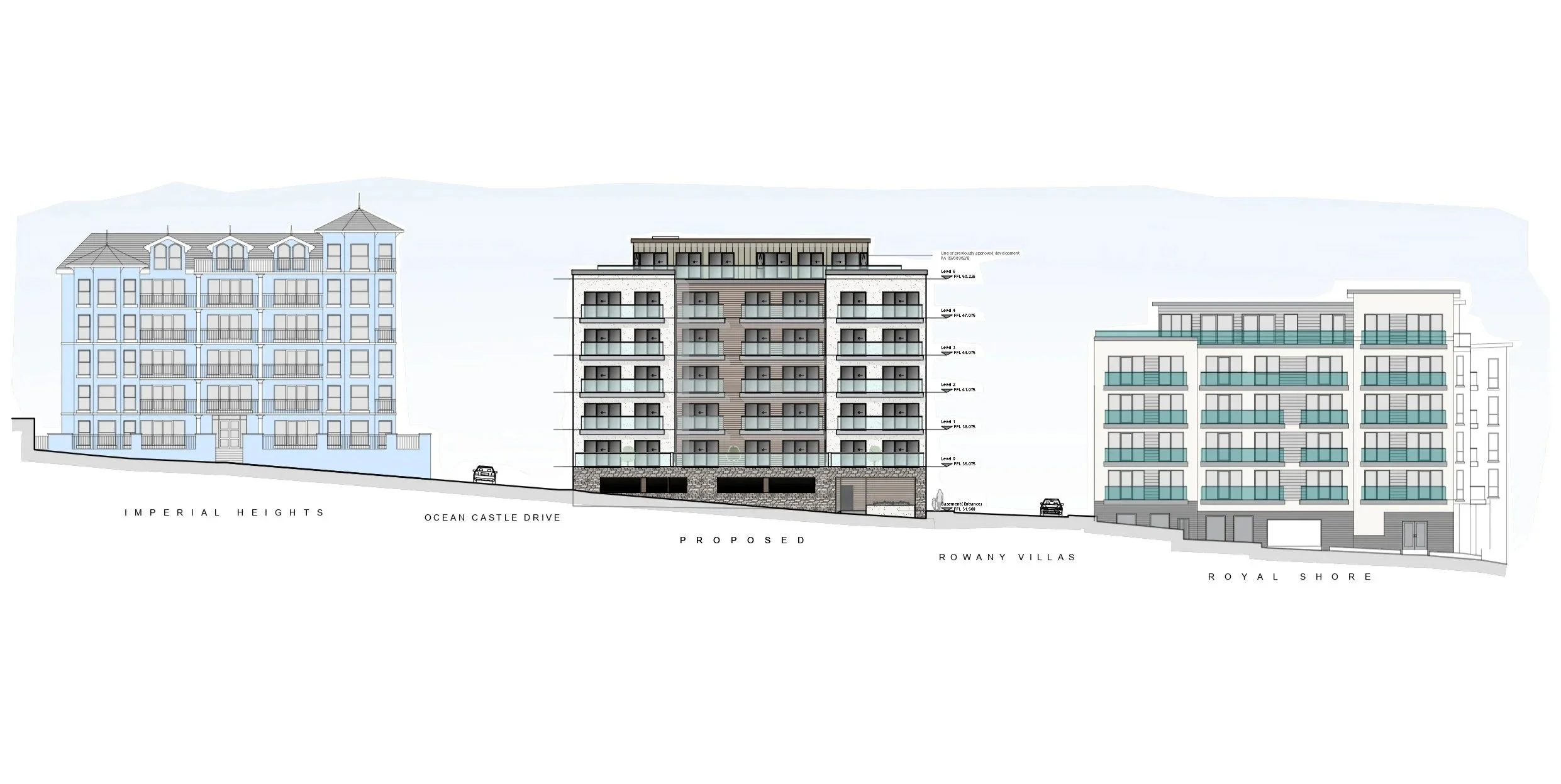
At the core of the project is a context-driven architectural response, led by the design team here at Cornerstone Architects, who developed a design shaped by the coastal setting, the sloping topography, and the aesthetic of neighboring buildings. This approach ensures that Ocean Castle not only provides much-needed new homes but also strengthens and completes the existing promenade streetscape.
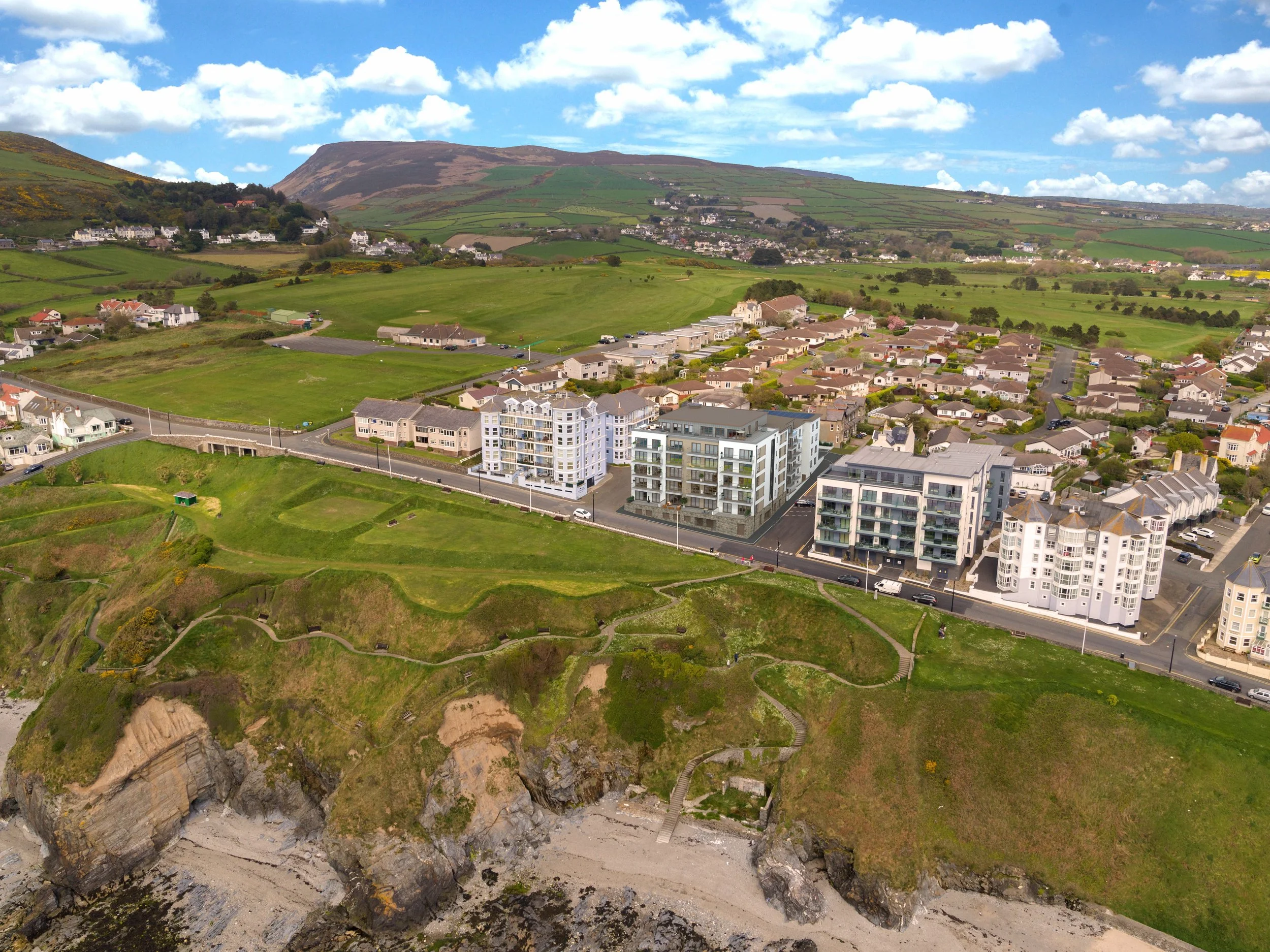
For illustration only. Imagery shows earlier iteration and may differ from the current approved scheme.
The development delivers 38 apartments arranged across three vertically expressed blocks. The massing steps down in response to the natural slope, allowing the building to sit appropriately between the adjacent developments. This approach reduces perceived height, forming a gradual transition to the townhouses further south.
Indents, projections, and changes in depth help break the overall form into smaller components. The penthouse level is set back from the main façade, reducing its visibility from street level and maintaining clear views along Spaldrick Promenade.
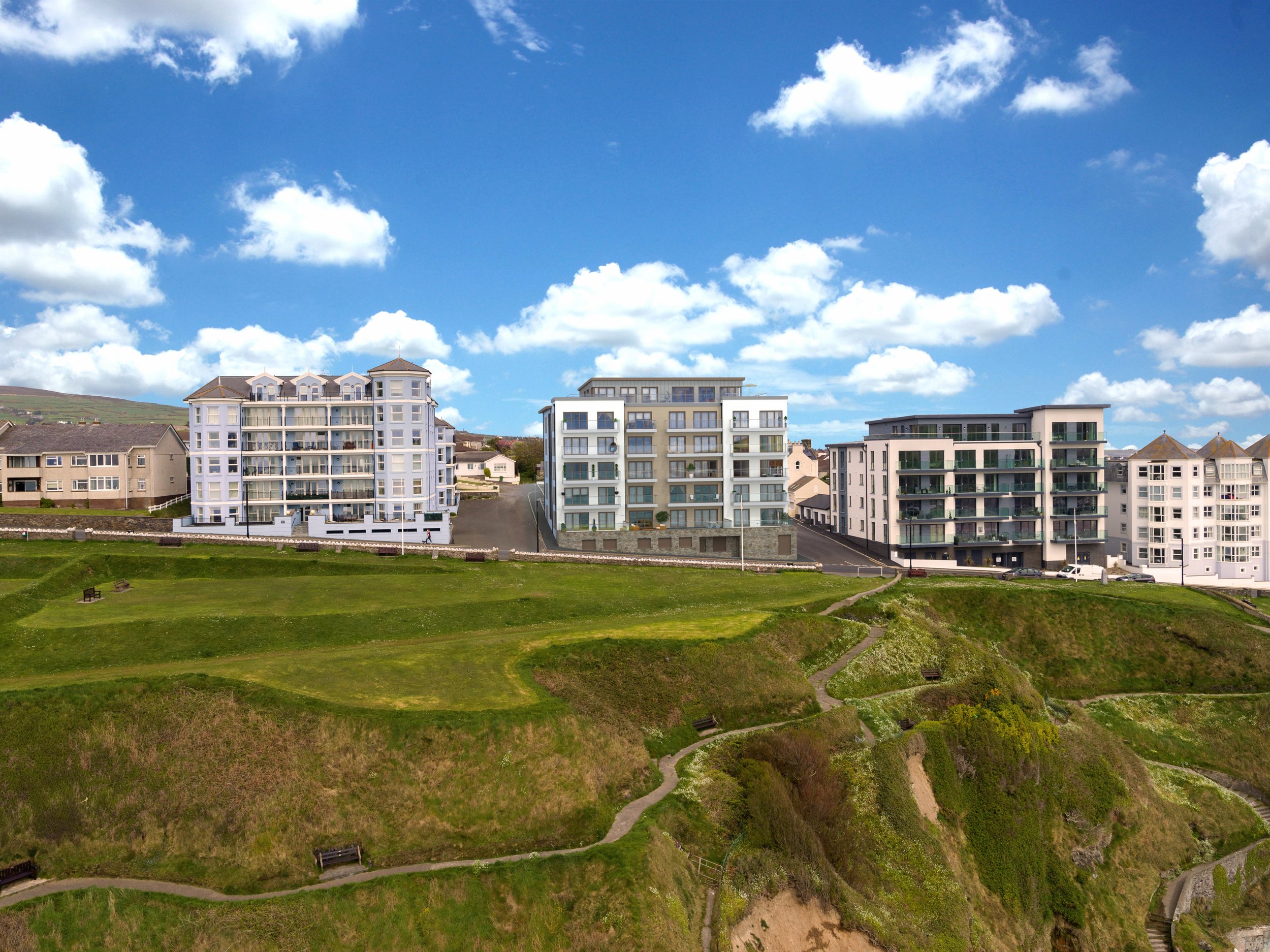
For illustration only. Imagery shows earlier iteration and may differ from the current approved scheme.
Material choices were guided by both the coastal environment and the architectural character of the wider promenade. A stone-effect plinth provides a grounded base and reflects local materials. Standing-seam metal cladding, timber-effect detailing, and aluminum windows in muted tones form a contemporary but respectful palette. Generous glazing maximises natural light and allows principal rooms to benefit from uninterrupted views across Port Erin Bay.
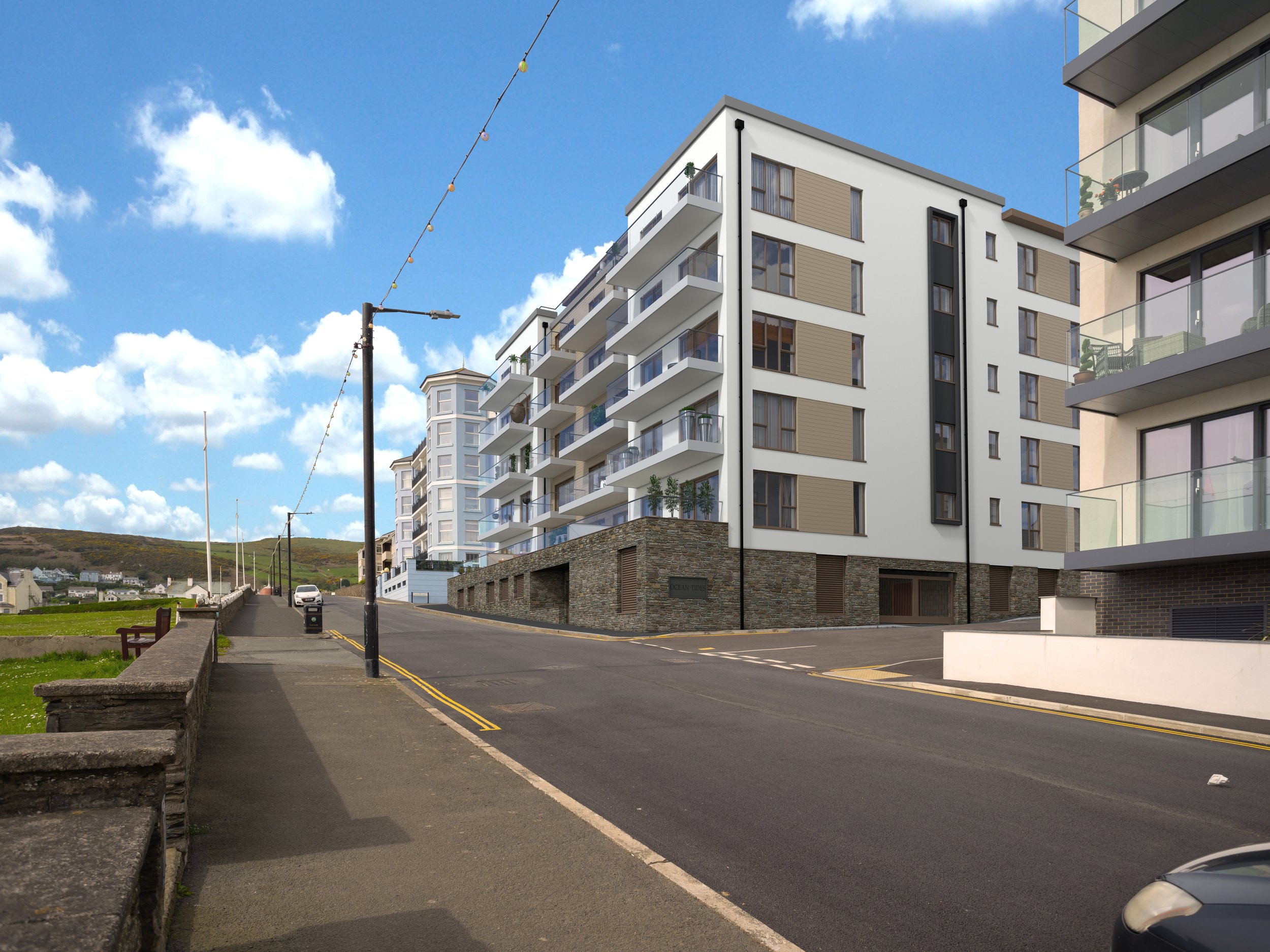
For illustration only. Imagery shows earlier iteration and may differ from the current approved scheme.
Landscape design has been used to soften the building and improve the experience for residents and neighbours. A private courtyard offers shared outdoor space, while planting along the eastern boundary helps buffer adjacent properties. The planting strategy promotes biodiversity through the use of nectar-rich species, native trees, and wildflowers.
Sustainability measures form a core part of the design. A fabric-first approach ensures high thermal performance, supporting by technologies including air-source heat pumps, electric heating systems, mechanical ventilation with heat recovery, and rooftop photovoltaic panels. These measures reduce operational energy demand and support long-term efficiency.
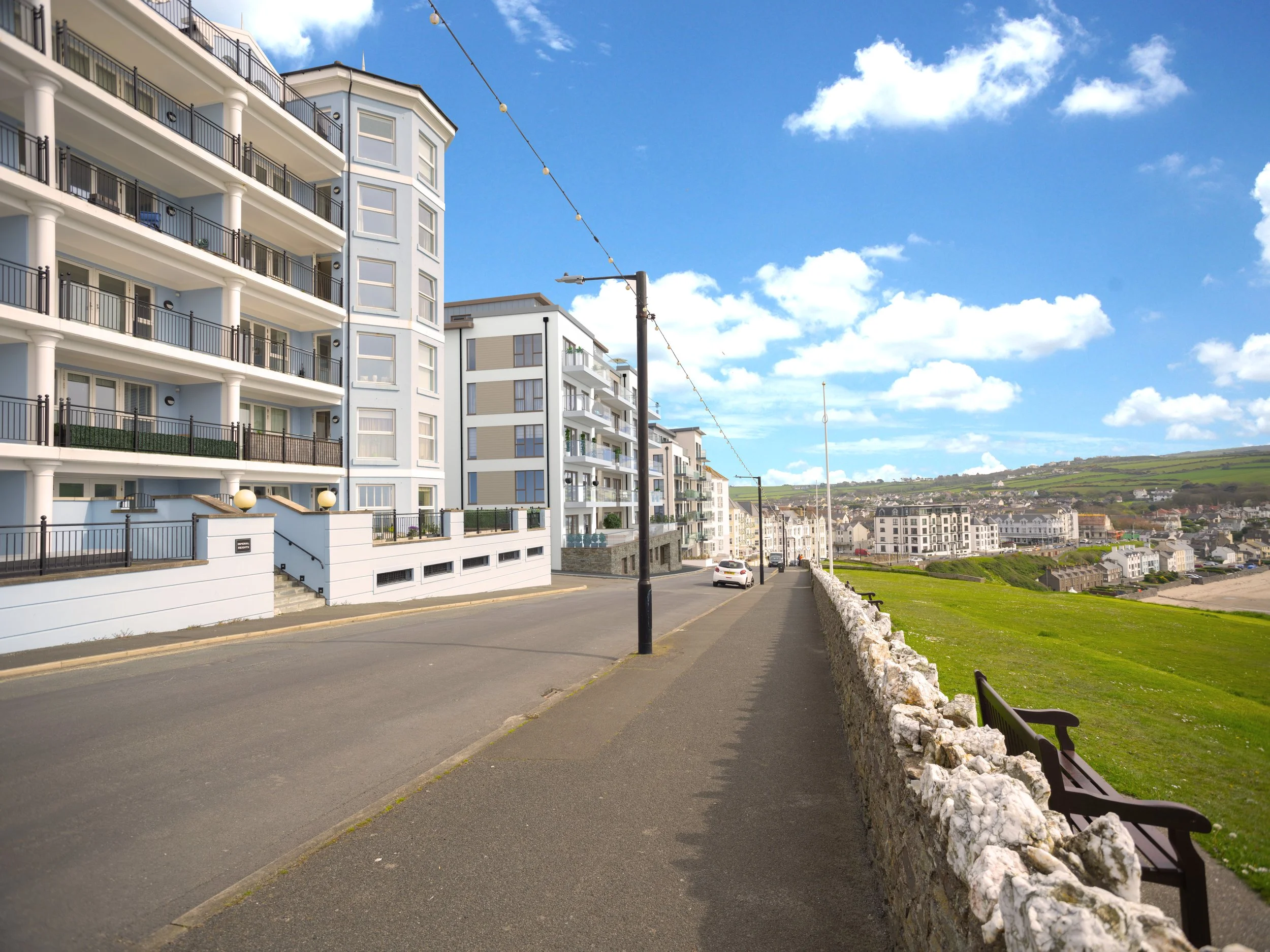
For illustration only. Imagery shows earlier iteration and may differ from the current approved scheme.
The planning appeal considered factors such as scale, privacy, amenity, and parking. Through a clear design rationale and alignment with policy, it was shown that the proposal fits well within its context, respecting neighbouring properties, and brings a long dormant brownfield site back into productive use. Transport assessments also confirmed that the development can be safely accommodated on the existing road network.
The inspector concluded that the scheme will improve the street scene, provide sustainable homes in an accessible location, and make a positive contribution to the character of the promenade.