Category: Project Overview
“This application offers a particularly welcome redevelopment which reflects the scale and style of the former shops which in turn were designed to reflect the style of the prestigious Collinson House when originally built in the 1920's.
Sympathetic developments in Port Erin have been a rarity since the Edwardians departed and it should be said that Cornerstone Architects have done a first class job with these plans.”
-public comment on planning application
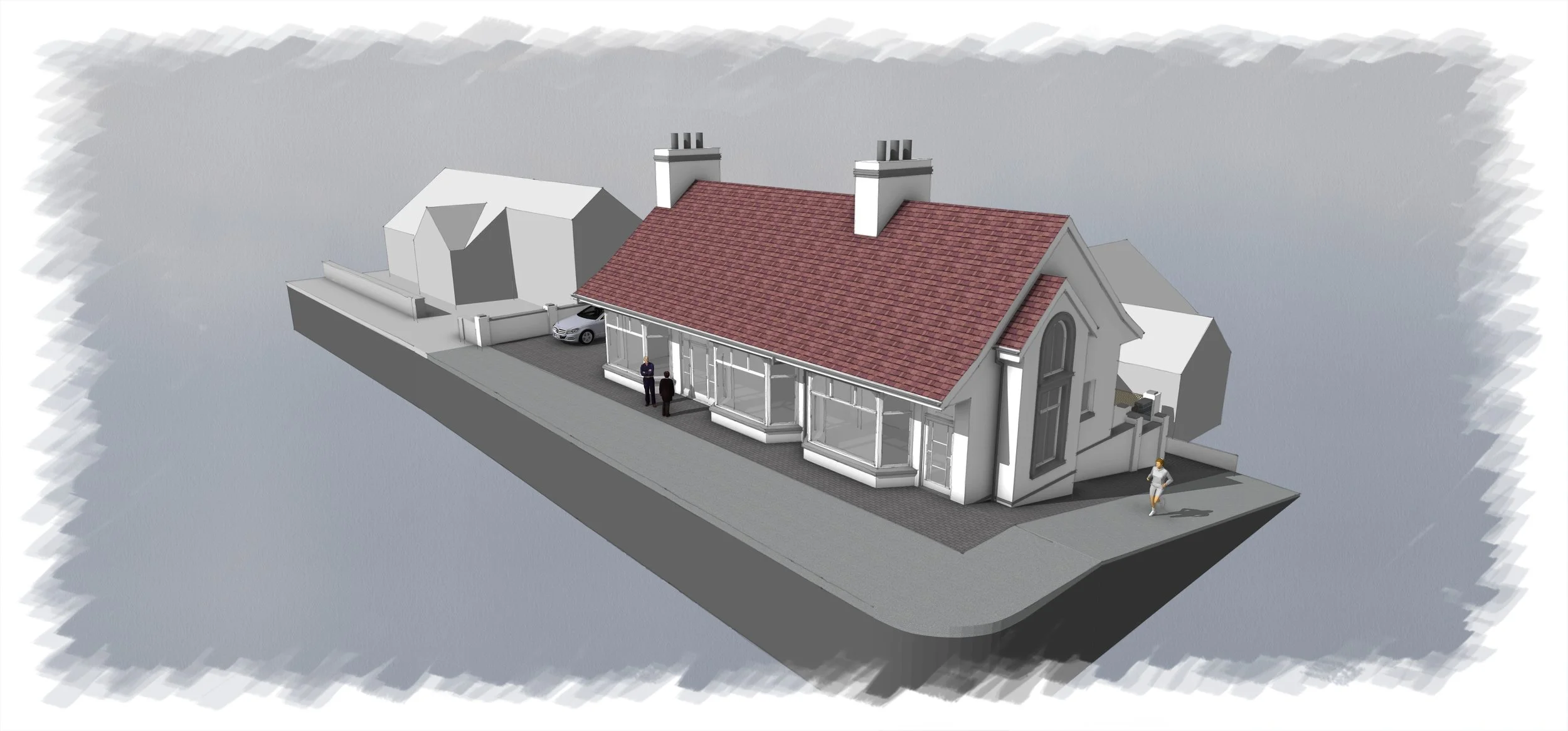
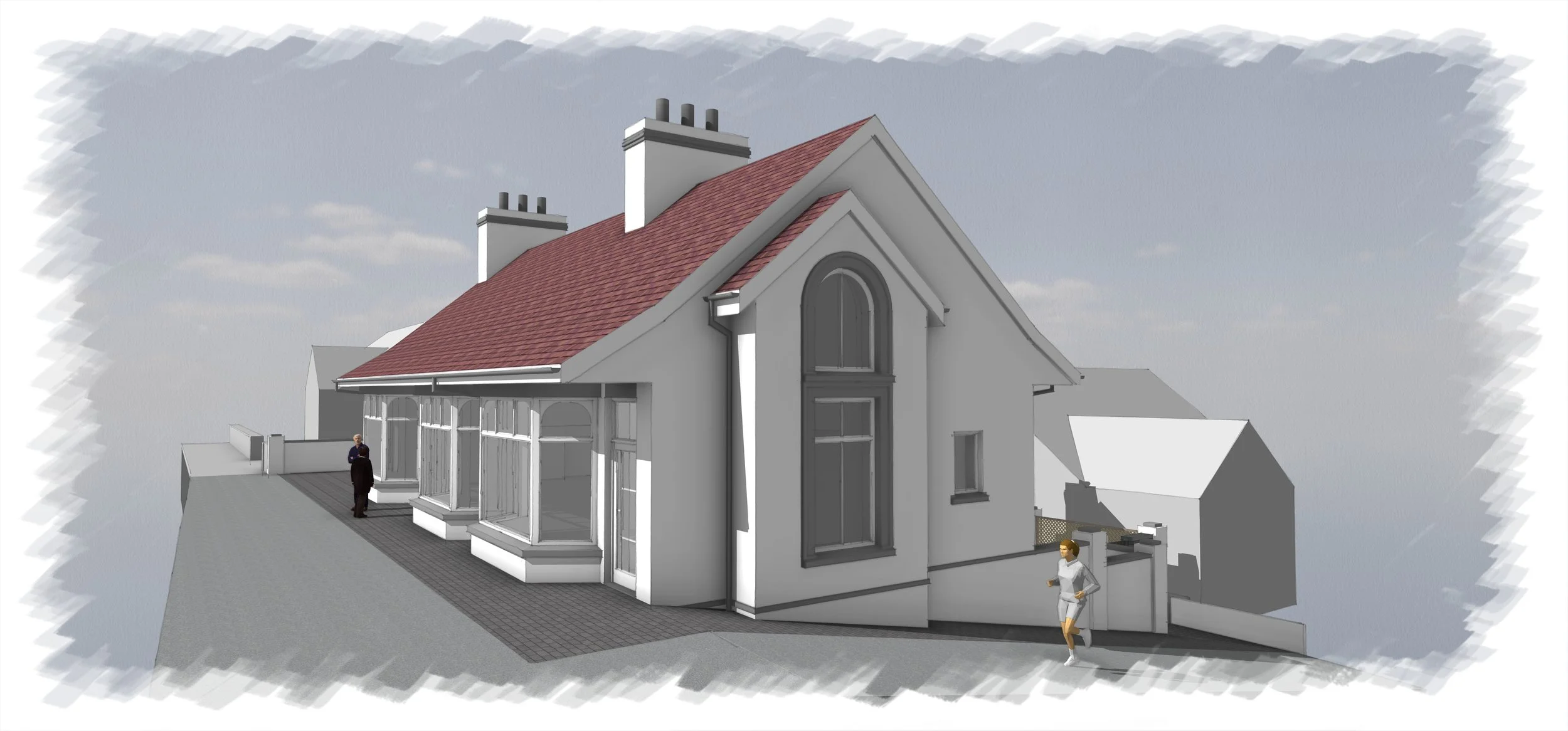
This project focuses on the sensitive replacement of a long‑vacant and structurally compromised terrace at Spaldrick. The existing cottages had deteriorated significantly and were listed on the Isle of Man’s Unoccupied Urban Sites Register, highlighting the need for regeneration. The Register identifies previously developed urban land that has remained vacant or under‑used and has clear potential for redevelopment, helping to prioritise the reuse of sites within existing settlements rather than extending into the countryside. Sites included are often visually deteriorated or redundant in their former use, making them a focus for reinvestment and improvement. This proposal has now been submitted for planning approval as the next step in bringing the site back into productive use.
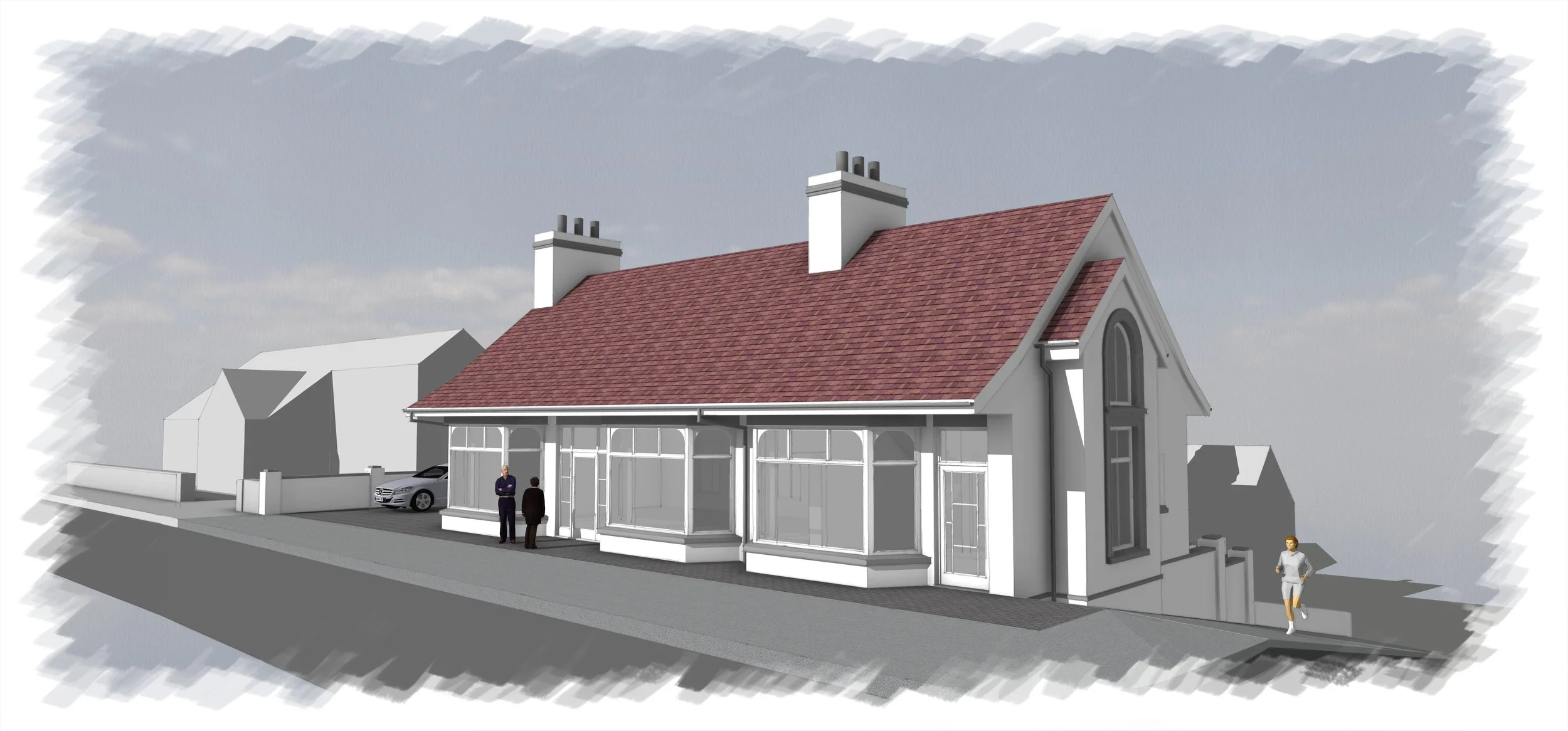
Structural assessments confirmed extensive defects and insufficient internal heights within both the lower‑ground and roof‑space accommodation. While refurbishment was technically possible, the level of intervention required would have amounted to near‑reconstruction, offering limited long‑term benefit and failing to address fundamental issues such as structural stability, energy performance and internal usability. The design team therefore concluded that a demolition‑and‑replacement approach would provide a more sustainable, future‑proof solution. Rebuilding enables the integration of modern construction standards, including improved thermal performance, enhanced airtightness and the incorporation of renewable technologies such as solar panels. It also allows this Unoccupied Urban Site to be regenerated as a high‑quality, efficient building that meets contemporary expectations.
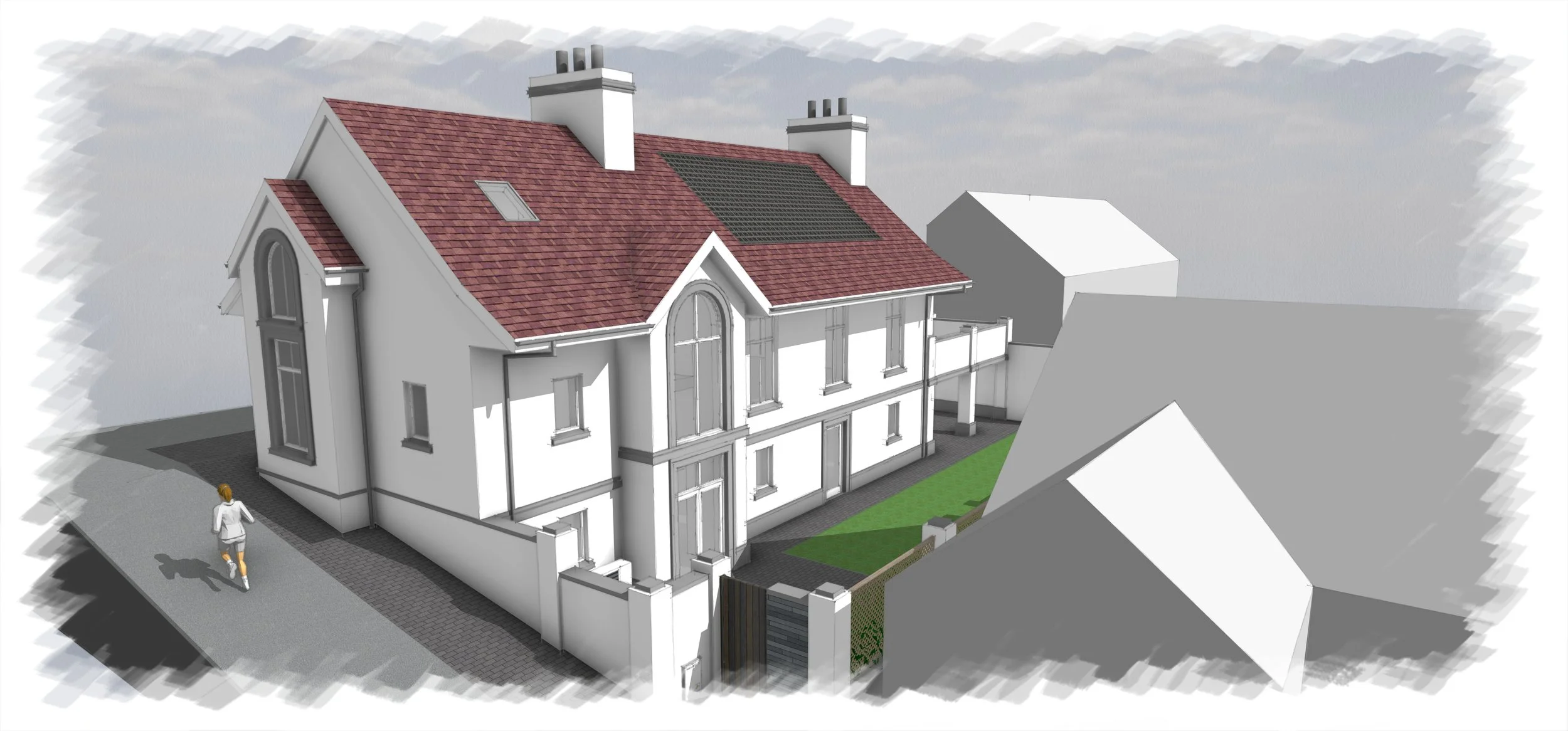
By responding to the site’s sloping topography, the replacement building retains the footprint and overall domestic scale of the original terrace. Three traditional bays, a simple pitched roof with sprocketed eaves, and restrained masonry detailing all draw from the former cottages and neighbouring Collinson House. Materials are intentionally modest (smooth painted render and tiled roofing) to ensure the new building integrates seamlessly with the streetscape.
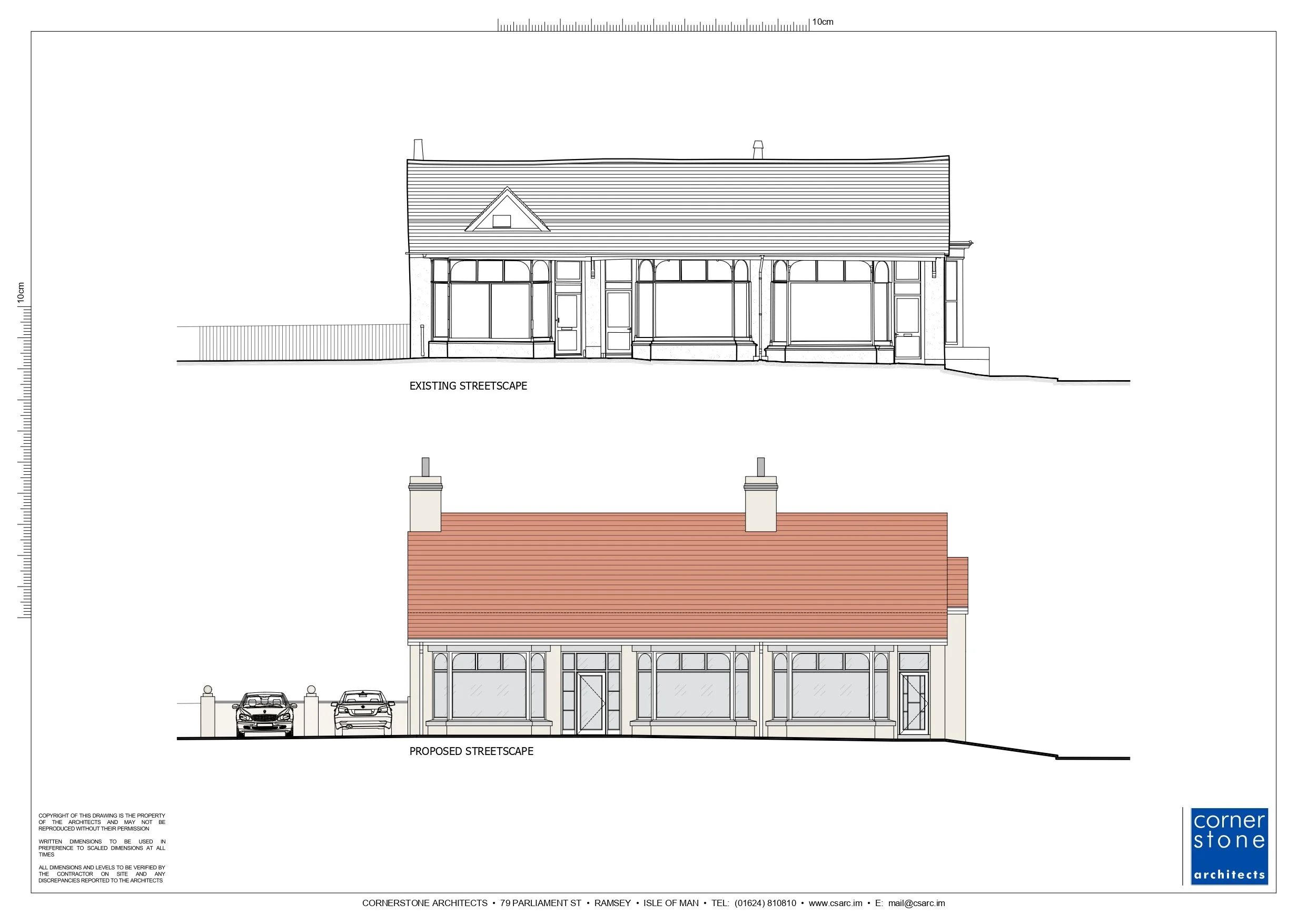
Overall, the project revitalises a prominent urban plot with a contemporary yet contextually grounded design. It replaces an unsafe structure with an energy‑efficient, well‑considered building that enhances the setting and brings new life to an underused site.